


6 Yoga Poses You Should Never Do

Yoga is meant to be super relaxing and good for people of all fitness levels – and it is. But there are some moves that are so complex and advanced that most folks are better off steering clear.
Putting excess pressure on bad knees, trusting balance that hasn’t developed yet, or attempting to bend yourself into a pretzel on your first day are all yoga moves to be avoided. But we don’t want to discourage you from doing yoga entirely, as the practice has many health benefits including increased flexibility and a calmer mind.
Following are seven yoga poses you should never do as a beginner.
1. Uttanasana – Standing Forward Bend
What could be wrong with touching your toes? Every school student does this in gym class all the time. And the pose is good for loosening up your hips, calves, and hamstrings.
This is a deceptively simple move, but actually causes a large percentage of known yoga injuries. Forcing yourself to touch your toes without bending your knees can be very damaging to the back. It may also tear those muscles that you intended to stretch.
If you can comfortably complete this move, feel free to do so. But if not, bend your knees as you do it or use a foam block on the floor to stop the stretch before you overextend.
2. Sarvangasana – Shoulder Stand
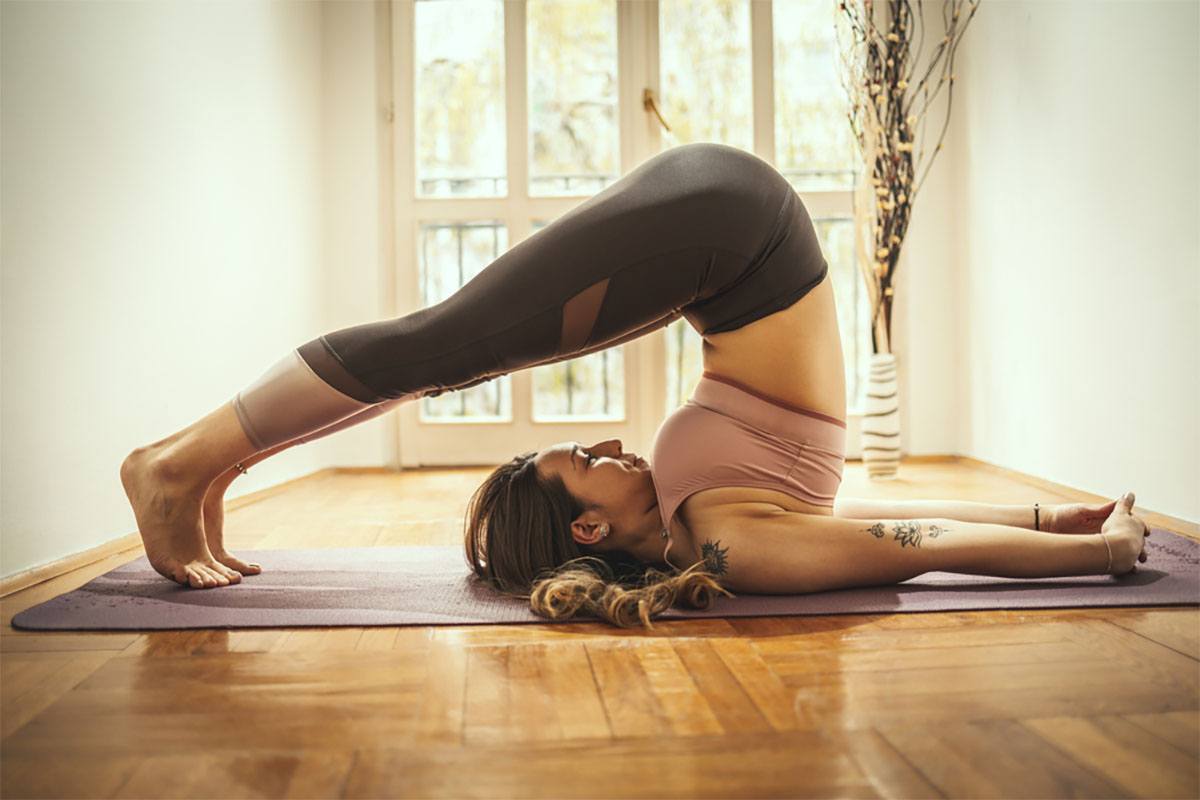
With this move, you lie flat on your back and then push your feet and lower body up into the air as far as possible as you balance on your upper arms and elbows. Again, it looks relatively simple, but the shoulder stand actually puts a ton of pressure on your neck and compresses your spine in the process.
No one with back or neck issues should ever attempt this move. It’s also not great for people with high blood pressure. Interestingly, folks with glaucoma are also advised to skip the shoulder stand as their eyes are unable to adjust to the increased pressure.
3. Salamba Sirsasana – Headstand

Going a step further from the shoulder stand is a headstand. Obviously this move also puts a ton of pressure on the neck, not to mention your head. It, along with all inversion moves (those that have you upside down), are not safe for people with neck or back problems, glaucoma, or high blood pressure.
But even for folks with no preexisting conditions, the risk of falling is the main concern. That’s how many people get hurt while attempting a head stand.
4. Bound Triangle Pose
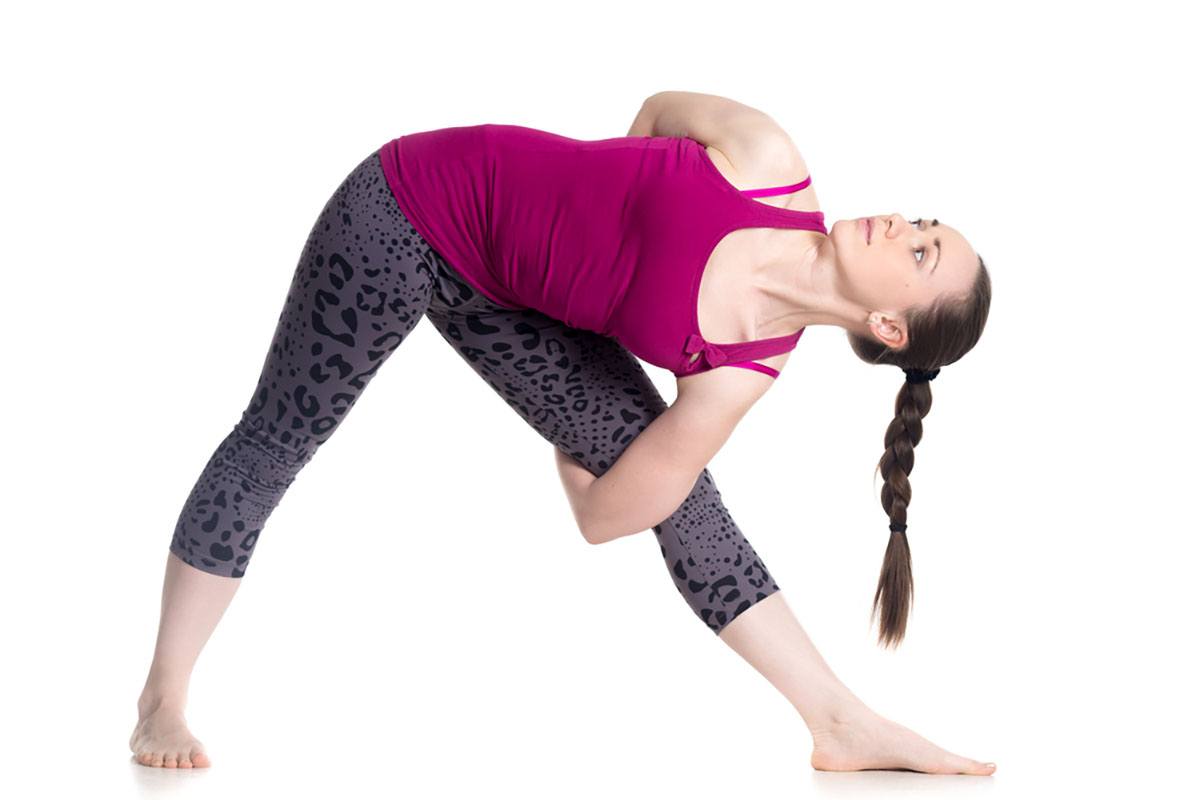
This convoluted pose starts with a deep lunge, the back leg straight and the front leg bent at the knee. Then, the entire upper body is cranked sideways over the front leg. One arm reaches forward between the legs, while the other reaches backward so that the hands meet and clasp underneath.
Just reading the description of this move is challenging, so it won’t be hard to believe that there are many opportunities for physical injury involved in the Bound Triangle Pose. If you do attempt it, take each part slowly and deliberately, and stop the moment you feel any excess strain.
5. Ustrasana – Camel Pose
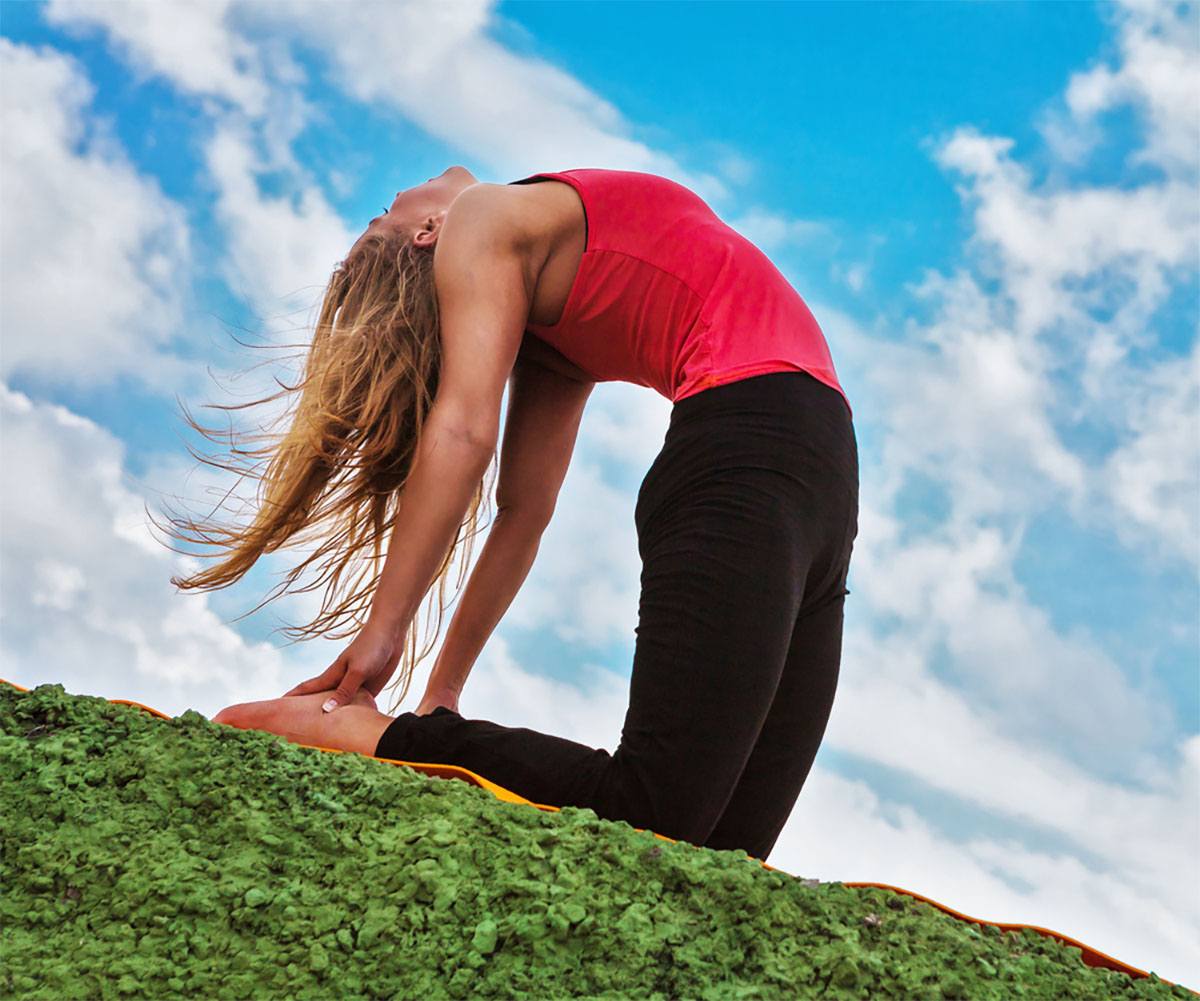
In Camel Pose, you start out on your knees and then bend backwards, looking toward the sky, until your hands can grasp your heels. The move is meant to open the lungs and relieve respiratory issues, as well as help manage anxiety and fatigue.
However, anyone with any sort of back or neck issues needs to steer clear. Even healthy people who did backbends all day long as children may find that this stretch is too intense for their adult body. Plus, it’s easy to lose balance and topple to one side or the other.
6. Mandukasana – Frog Pose

Frog legs are specially designed for jumping, but human legs are not. So it stands to reason that pushing our bodies into a frog pose can be challenging. In this move, the legs are spread into a near split, something that requires a lot of practice to be able to do without injury.
Done safely, the Frog Pose is great for opening up the hips and groin. Also, because it is something that must be eased into, there is plenty of opportunity to practice mindful breathing. If you are someone who spends a lot of time at a desk or in the car, the frog pose can relieve stiffness. But if you get a groin injury from pushing too hard, you’ll hurt for weeks no matter what you’re doing.
Yoga is an excellent form of exercise for just about anyone. The moves can be modified or avoided as necessary to protect your joints, muscles, and spine. There are just some poses that are more dangerous than others due to the application of pressure where it shouldn’t be or an unnatural body position. Use your best judgment when practicing yoga, and remember – if it hurts, don’t do it!
